Lacquer vs Oil on Canvas: Which Vietnamese Painting Should You Buy?
One of the most common questions we hear at Hanoi Art Gallery is also one of the most interesting: should I buy a lacquer painting or an oil on canvas? Both traditions are well represented in our collection. Both have produced extraordinary works by Vietnamese artists. And both are genuinely worth owning. But they are very different objects – different to look at, different to live with, and different as investments. This guide will help you decide.
A Brief History of Each Medium in Vietnam
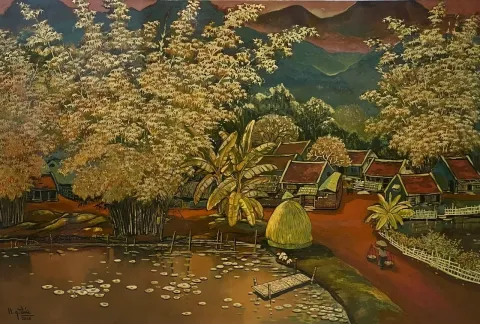
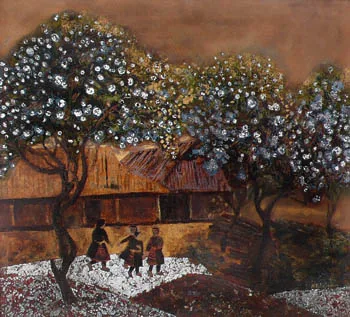
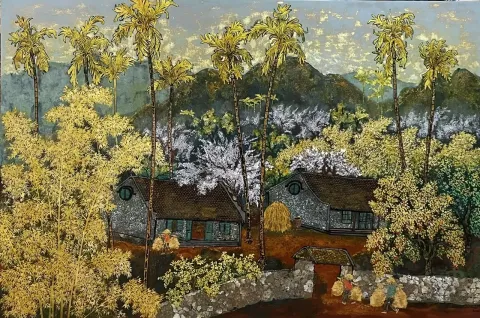
Vietnamese lacquer painting (son mai) has its roots in centuries of decorative lacquerwork in Southeast Asia, but the fine-art tradition was established at the Ecole des Beaux-Arts de l'Indochine in Hanoi in the 1930s, when Vietnamese artists began using natural lacquer resin as a serious painting medium. The results were unlike anything being made anywhere else in the world – and son mai remains one of the most distinctive national art forms in Asia.
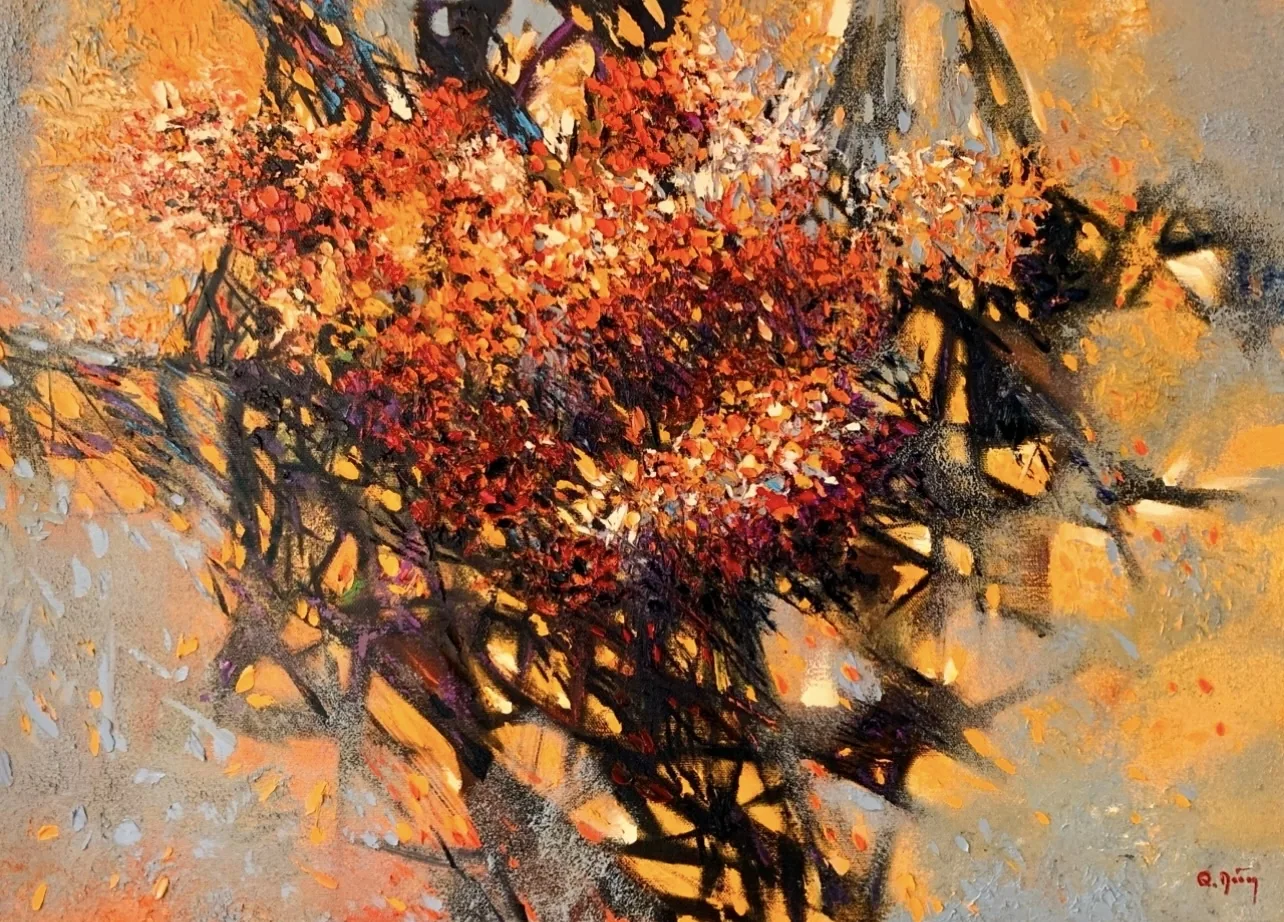
Oil painting arrived in Vietnam through the same French colonial art schools and was embraced by Vietnamese artists who brought their own cultural perspective to a Western medium. The result was a distinctly Vietnamese school of oil painting – impressionist in sensibility, rich in local colour and subject matter – that flourished through the 20th century and continues today.
The Look and Feel
This is where the two media differ most dramatically.
Lacquer paintings have a surface that is unlike anything in Western art. The layers of natural lacquer resin, hand-polished over months, produce a depth and luminosity that changes as the light changes. A great son mai work seems to glow from within – the blacks are not flat but deep, the reds have an inner warmth, the golds shift as you move. The surface is neither matte nor glassy but something entirely its own. Many collectors describe the experience of living with a lacquer painting as one that reveals new details over time – the more you look, the more you see.
Oil paintings on canvas offer a different kind of beauty. The surface is familiar to Western eyes – textured, immediate, direct. Vietnamese oil painters have developed a particular sensitivity to light and atmosphere that reflects both their French academic training and the qualities of light in Southeast Asia. Works by artists like Nguyen Van Bang have an impressionist warmth that translates beautifully into any interior.
Durability and Care
Lacquer is the more durable medium by a significant margin. Natural lacquer resin is waterproof, resistant to humidity and temperature change, and exceptionally stable over time. A well-made son mai painting requires very little maintenance – periodic dusting with a soft cloth and protection from direct UV light. It ships internationally without the risks associated with rolled canvases.
Oil on canvas requires more attention. It is sensitive to humidity, temperature fluctuation and direct sunlight. For international collectors, framing behind UV-protective glass is strongly recommended. Over decades, oil paintings may require professional conservation – cleaning, varnish removal or minor restoration. This is normal and does not diminish a work's value, but it is worth factoring into your ownership plans.
Investment Considerations
Both media have produced works of significant and growing value in the Vietnamese contemporary art market. However, there are some meaningful differences worth understanding.
Lacquer paintings by established artists tend to command higher prices at the outset – reflecting the time and skill required to produce them. A major son mai work by Thành Chương or Đinh Việt represents a serious acquisition. Because the technique is extremely time-consuming and mastered by few artists at a high level, the supply of genuinely fine lacquer works is limited. This scarcity has supported consistent appreciation over time.
Oil paintings offer a wider range of entry points. It is possible to begin collecting Vietnamese oil painting at a more accessible price, and the most significant works by top artists command serious prices. The market for Vietnamese oil painting among international collectors has grown steadily, particularly in Europe and the United States.
Which Should You Choose?
Choose a lacquer painting if:
- You want something uniquely Vietnamese – an art form that exists nowhere else in the world at this level
- You are drawn to surfaces with depth, luminosity and visual complexity
- You want a durable work that requires minimal maintenance
- You are thinking seriously about long-term investment value
- You want a statement piece that will anchor a room
Choose an oil painting if:
- You prefer a familiar, immediately legible surface and format
- You want more flexibility in framing and display options
- You are starting your collection and want an accessible entry point
- You are drawn to impressionist sensibility and figurative painting
- You want something that fits naturally into a Western interior
Many collectors at Hanoi Art Gallery do both – starting with an oil painting on a first visit and returning for a lacquer work once they have spent time with Vietnamese art. There is no wrong answer. The best painting is always the one that stops you in your tracks.
Come and See Both
The only way to truly understand the difference between son mai and oil on canvas is to stand in front of both. Our team at 36-38 Trang Tien Street is happy to walk you through the collection and let the works speak for themselves.
Contact: hanoiart36@gmail.com | WhatsApp/Zalo: +84 984 589 999