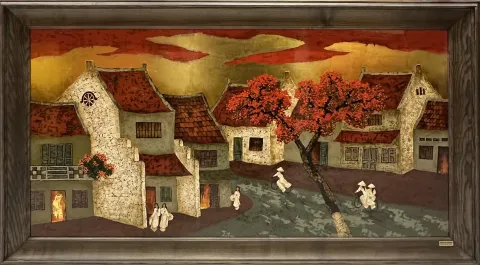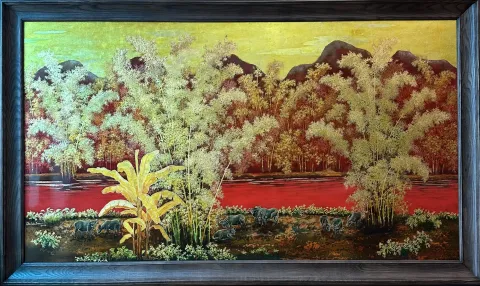
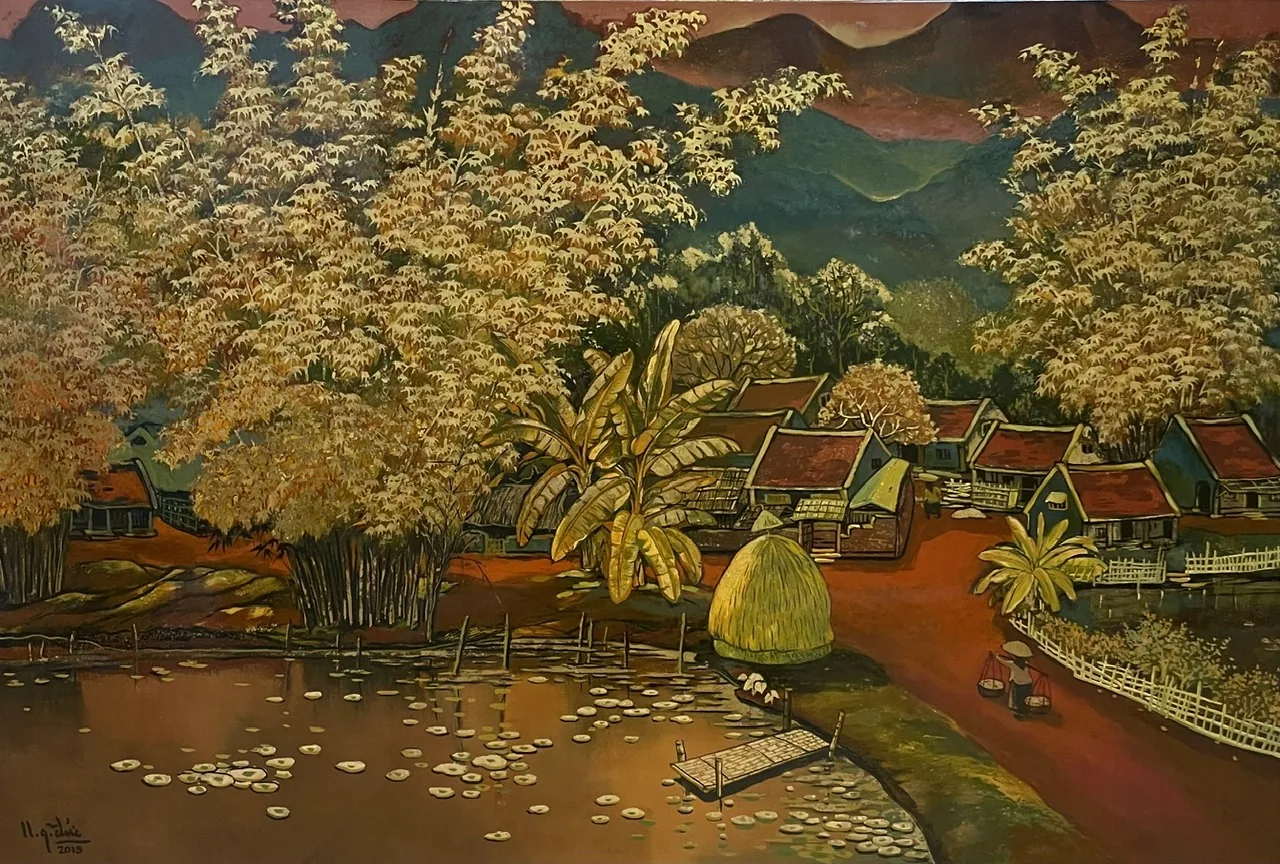
If you have ever walked through a Vietnamese art gallery and stopped in front of a painting that seemed to glow from within – deep reds, luminous blacks, golds that shift as you move – you were almost certainly looking at a piece of son mai, Vietnamese lacquer painting. It is one of the most distinctive and technically demanding art forms in Southeast Asia, and it is central to the collection at Hanoi Art Gallery.
This guide walks you through everything you need to know: what son mai is, how it is made, what makes a great piece, and how to buy with confidence.
What is Vietnamese Lacquer Painting?
Son mai is a fine-art painting technique that uses natural lacquer resin – harvested from the Rhus succedanea tree, grown primarily in Phu Tho province in northern Vietnam – as its base material. Unlike the decorative lacquerware you might find in souvenir shops, fine-art son mai works are serious, large-scale paintings that have been central to Vietnamese contemporary art since the early 20th century.
The technique was developed at the Ecole des Beaux-Arts de l'Indochine (Indochina School of Fine Arts) in Hanoi in the 1930s, where Vietnamese artists began experimenting with traditional lacquer craft as a fine-art medium. The results were extraordinary – and the tradition has continued and evolved ever since.
How a Lacquer Painting is Made
Creating a lacquer painting is a slow, meditative process that can take months to complete. Understanding how it works helps you appreciate why great son mai pieces carry the prices they do.
The board: Every lacquer painting begins with a wooden board – typically teak or pine – that is sanded smooth and coated with an initial layer of raw lacquer mixed with ash or sawdust. This base layer must dry completely before the next is applied.
The layers: A finished lacquer painting typically contains between 15 and 25 layers of lacquer. Between each layer, the artist can embed materials into the surface: crushed eggshell (to create white and off-white tones), gold and silver leaf, mother-of-pearl inlay, and coloured lacquer pigments. Each layer must cure for several days before the next is applied.
The polishing: When all layers are complete, the artist begins hand-polishing – using pumice, charcoal, and finally fine sandpaper – to gradually reveal the painting hidden beneath the surface. As material is removed, the different layers interact, creating depth and luminosity impossible to achieve with any other medium.
The result: A finished son mai painting has a surface unlike anything in Western painting traditions. It is neither matte nor glassy, but something in between – warm, deep, and alive. Under different lighting conditions, the same painting can look entirely different.
Materials Used in Lacquer Painting
Part of what makes son mai so interesting is the range of materials artists use within a single work:
- Natural lacquer resin (son ta): the primary binding and coating material, ranging from amber to dark brown in its raw state
- Eggshell (vo trung): creates white, ivory and off-white areas; each fragment is laid individually by hand
- Gold and silver leaf (vang bac dat mong): used for highlights, backgrounds and decorative elements
- Mother-of-pearl inlay (xa cu): adds iridescent colour and pattern
- Coloured lacquer pigments: mixed directly into the lacquer layers to create reds, greens and blacks
What to Look for When Buying
Not all lacquer paintings are equal. Here is what separates an outstanding piece from an ordinary one:
Depth and luminosity: Hold the painting at an angle to the light. A great son mai piece has visible depth – you can almost see into the surface. Lesser works look flat by comparison.
Craftsmanship in the details: Look closely at areas of eggshell, inlay or gold leaf. In a fine piece, these elements are integrated seamlessly into the composition. In a lesser piece, they can look pasted-on or clumsy.
The artist's reputation: Lacquer painting is extremely demanding. The best pieces come from artists who have spent years, often decades, mastering the technique. At Hanoi Art Gallery, we work with established artists including Thanh Chuong, Dinh Viet, Pham Thang Long and Dinh Quan.
Certificate of authenticity: Every painting sold at Hanoi Art Gallery comes with a signed Certificate of Authenticity from the artist.
Caring for Your Lacquer Painting
Son mai is remarkably durable – far more resistant to humidity and temperature change than oil on canvas. A few simple precautions will ensure your piece lasts for generations:
- Avoid direct sunlight: UV light can fade the coloured lacquer pigments over time
- Keep away from extreme heat sources: radiators, fireplaces and direct sun through glass
- Dust gently with a soft, dry cloth – never use water or chemical cleaners on the surface
- A stable indoor environment (18-26 degrees C, 40-60% humidity) is ideal
Shipping and Investment
Lacquer paintings ship extremely well internationally. Because the surface is hard and the board rigid, there is no risk of cracking or rolling. Hanoi Art Gallery ships worldwide via FedEx with full insurance. Delivery times vary by destination and shipping method; our team will give you a detailed estimate before purchase.
From an investment perspective, son mai works by established Vietnamese artists have shown consistent appreciation over the past two decades. The combination of technical scarcity and growing international interest in Vietnamese contemporary art makes this a genuinely interesting collecting category.
Price Range
Prices depend on the artist's reputation, the size and complexity of the work, and the materials used — gold and silver leaf, eggshell and mother-of-pearl all add time and cost. As a rough guide:
- Small works: $200 – $500
- Medium works: $500 – $2,000
- Major pieces by established artists: $2,000 and above
Tips for First-Time Buyers
- Choose a work that resonates with you emotionally — you will live with it for years.
- Ask for the certificate of authenticity and check the artist's signature.
- Ask about the artist: their training, their other works, where they have exhibited.
- Think about long-term value as well as how the piece suits your space.
Visit Us or Shop Online
Hanoi Art Gallery is located at 36-38 Trang Tien Street, in the heart of Hanoi's cultural district, a short walk from Hoan Kiem Lake and the Old Quarter.
Contact: hanoiart36@gmail.com | WhatsApp/Zalo: +84 984 589 999