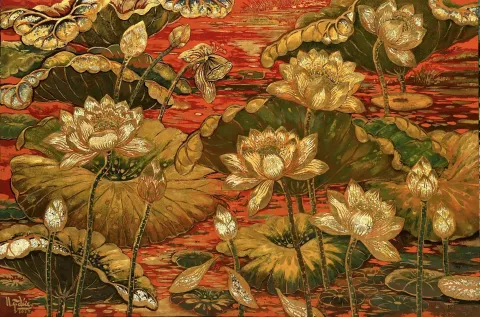

When you choose where to hang a lacquer painting, light and how it suits your interior usually come first. But the room’s conditions, the strength of the hanging system and the way you clean the surface decide whether the colours and finish last for years. This lacquer painting care and hanging guide covers the basics for displaying and looking after a painting at home. For any specific artwork, ask the gallery about its materials and any care requirements of its own.

Why lacquer paintings need their own care
A lacquer painting is built from many layers: natural lacquer resin and coloured lacquer, combined with materials such as eggshell and gold leaf, then ground back so the image emerges. Those layers respond differently to light, humidity and temperature, so good care mostly means avoiding sudden changes in the environment. To understand the structure better, read how a Vietnamese lacquer painting is made.
Choose the right spot
- Light: avoid places that receive direct sun, including sun coming through a window at certain hours. Strong light over a long period can change the colour of the surface.
- Humidity: do not hang a painting on a damp wall or one with stains or leaks. If you are unsure about the wall, check it before you drill.
- Heat and airflow: keep it away from stoves, heaters and a direct blast from an air-conditioner, because constant temperature swings are not good for the materials.
If the painting will hang in a lobby, restaurant or other commercial space where air-conditioning runs for many hours, see our curator’s guide to art for hotel and resort interiors.
Check before you hang
Take a few minutes to check three things:
- The wall: the type of wall (brick, concrete, plasterboard) decides which screws and anchors are suitable. Large, heavy paintings should be installed by someone with experience.
- The frame and the back of the painting: make sure the frame is solid and the fixing points for hooks or wire are secure. If anything feels loose, do not hang it.
- The hanging hardware: choose hardware with a stated load rating above the weight of the painting, and ask the gallery which fittings suit that particular work, because size and framing differ from piece to piece.
For large paintings, lift and hang with two or more people, and do not rest the painting directly on a stone floor or a sharp edge.

Cleaning: keep it light
In most cases you only need to brush dust off gently with a clean, soft, dry cloth. Do not use water, glass cleaner, cleaning solutions or polish, and do not rub hard. If the surface has a stain, a scratch or anything unusual, do not treat it yourself: take a photo and contact the gallery for advice.
If you notice a problem
If you see mould, cracks, raised areas or flaking, stop cleaning, move the painting away from damp or hot spots, photograph the affected areas clearly and contact the gallery or a conservator. Picking at it, wiping it or gluing it back usually makes the damage worse.
Moving house or shipping a painting
Do not pack it like an ordinary household item. Ask the gallery how to protect the surface, frame and corners during transport, or use a handler with experience in fine art.
What to ask the gallery when you receive a painting
- Does this painting have any care requirements of its own?
- Which hanging hardware suits its size and frame?
- Whom should I contact if it needs cleaning or repair?
If you are new to collecting, our complete guide for first-time buyers will help you prepare before you decide.