Vietnamese Art for Hotel and Resort Interiors: A Curator's Guide
Walk into any of Vietnam's finest hotels – the Park Hyatt Saigon, the Regent Phu Quoc, the InterContinental Hanoi Landmark 72 – and you will notice something before you notice the furniture, the lighting, or the marble floors. You will notice the art. Original Vietnamese paintings hang in lobbies, corridors, suites, and restaurants, transforming functional spaces into cultural experiences that guests remember long after they check out.
This is not accidental. The most successful hospitality projects in Southeast Asia have learned that art is not decoration – it is identity. A hotel without art is a building. A hotel with the right art is a destination.
For hotel owners, interior designers, and hospitality developers looking to source authentic Vietnamese art for their projects, this guide explains what works, why it works, and how to get it right.
Why Vietnamese Art Works in Hospitality Spaces
The hospitality industry has moved decisively toward locally sourced, culturally authentic design. Guests – particularly the international travelers who drive luxury hotel revenue – no longer want generic interiors that could be anywhere in the world. They want to feel that they are somewhere specific. They want the space itself to tell them something about where they are.
Vietnamese art is uniquely suited to this purpose for several reasons:
Visual richness without visual noise. Vietnamese lacquer paintings possess a deep, luminous surface quality that commands attention without demanding it. Unlike bright acrylic or digital prints, lacquer has a quiet authority that suits the contemplative atmosphere of a luxury hotel. Oil paintings by Vietnamese artists offer similar warmth and depth, with a textural richness that elevates any wall.
Cultural authenticity. An original Vietnamese painting on a hotel wall says something genuine about the country and its artistic traditions. It is a statement of respect for local culture – something that sophisticated travelers notice and appreciate, and something that travel publications and reviewers increasingly mention.
Durability. Vietnamese lacquer is one of the most durable art materials in existence. Properly maintained, a lacquer painting will retain its beauty for decades – far longer than prints, photographs, or paintings in less resilient media. For a hotel investing in art that must withstand years of service, lacquer is an exceptionally practical choice.
Light interaction. Lacquer surfaces respond to changing light conditions throughout the day. Morning sunlight reveals different colors and depths than evening lamplight. This means a lacquer painting in a hotel lobby is never static – it is a living element of the space that subtly shifts with the hours, giving returning guests something new to notice.
What Works Where: Art Placement for Hotels
The Lobby
The lobby is the first impression – the moment a guest transitions from the outside world into the world of the hotel. Art here must be large enough to command the space, visually engaging at a distance, and rewarding up close. This is where large-format lacquer paintings excel.
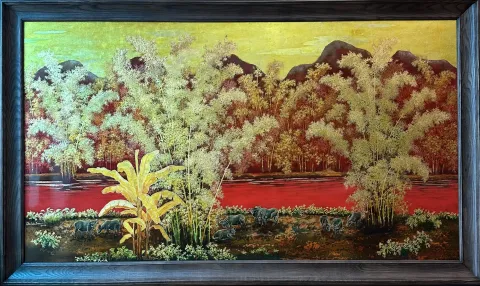
A panoramic lacquer landscape by an artist like Dinh Viet – bamboo groves in gold and silver against a dark background, stretching 100×180 cm or larger – creates an immediate sense of place and luxury. The deep, polished surface catches the lobby's ambient light and draws guests in for a closer look, often becoming a conversation piece and a photo backdrop.
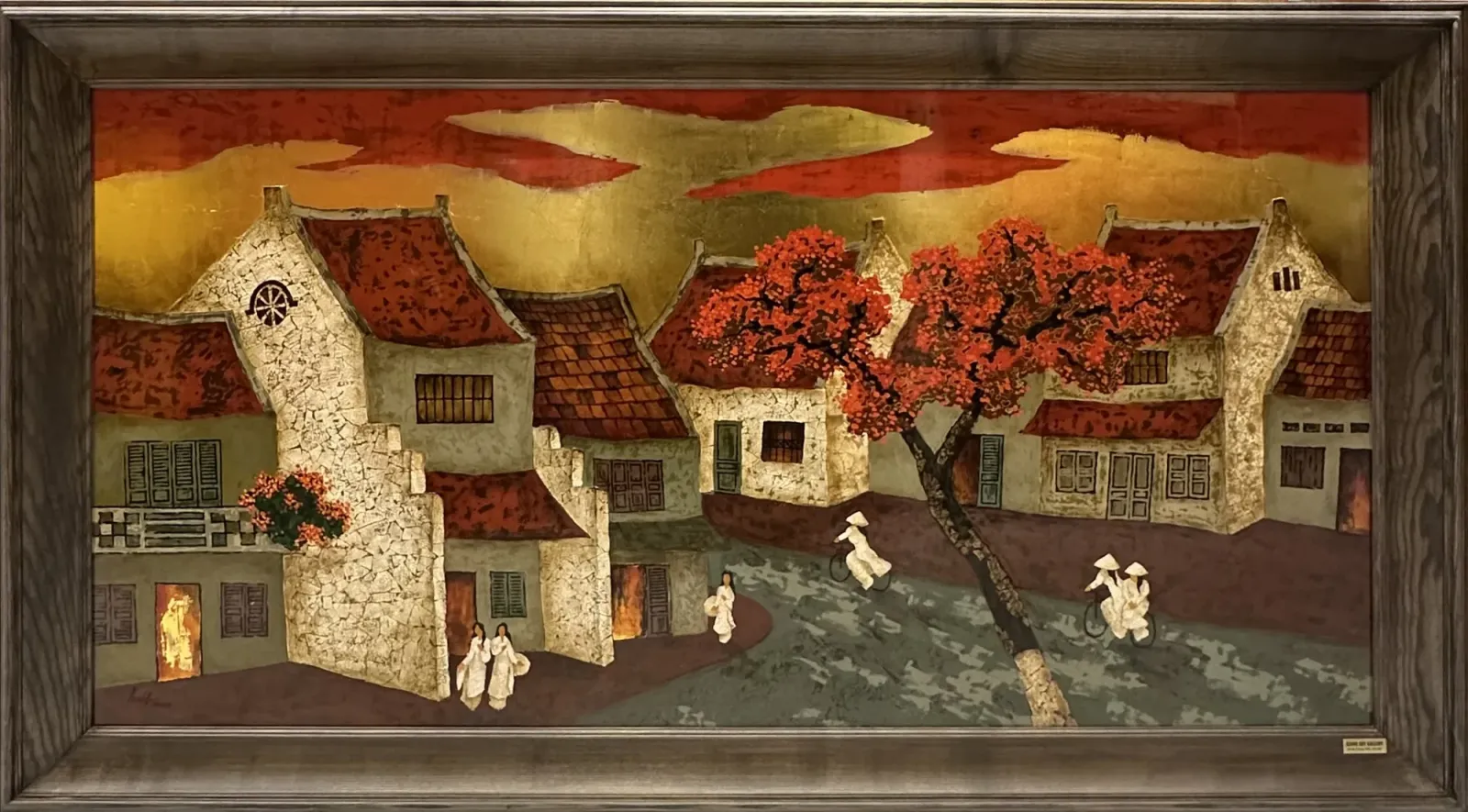
Alternatively, a large Hanoi Old Quarter oil painting by Pham Cuong gives urban hotels a warm, narrative focal point that connects the property to its neighborhood and city.
Guest Rooms and Suites
Guest room art must be calming, appropriate for extended viewing, and sized to the wall. Guests will look at this art while resting, reading, or simply lying in bed. It should not be busy, loud, or emotionally demanding.
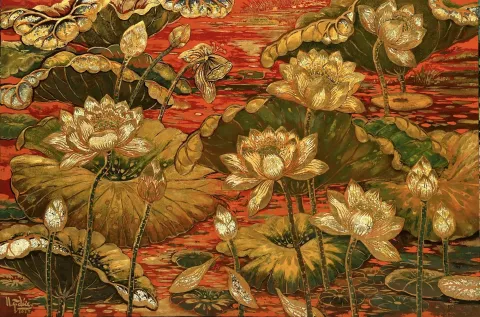
Lotus paintings by Bui Trong Du are ideal for guest rooms. Their meditative quality, soft luminosity, and natural subject matter create an atmosphere of serenity that supports rest and relaxation. Sizes in the 50×60 cm to 80×100 cm range work well above headboards or on feature walls.
For suites, consider abstract lacquer works by Lam Manh – sophisticated, non-representational pieces that add visual interest without imposing a narrative on the guest's experience.
Restaurants and Bars
Dining spaces benefit from art that creates atmosphere and conversation. The warm tones and human subjects of Nguyen Quang Duc's rural market scenes bring energy and cultural texture to a restaurant setting. The rich reds, golds, and earth tones of his lacquer palette complement the warm lighting typical of fine dining spaces.
For bars and lounges, consider figurative works or abstract compositions that add visual sophistication without competing with the social energy of the space.
Corridors and Public Areas
Corridors offer an opportunity to create a gallery-like experience – a curated sequence of artworks that guests encounter as they move through the hotel. A series of smaller works – 60×80 cm lacquer paintings on a consistent theme, such as lotus flowers, bamboo, or Vietnamese landscapes – transforms a functional corridor into a cultural journey.
This approach has been used to great effect by hotels like the Park Hyatt Saigon, whose collection of over 500 original art pieces turns every hallway into a discovery.
Choosing the Right Artists
The most important decision in hotel art curation is artist selection. The right artist brings not just visual quality but cultural credibility – a name that art-aware guests may recognize, a body of work that tells a genuine story about Vietnamese art and culture.
Hanoi Art Gallery works with a roster of established Vietnamese artists whose work is well-suited to hospitality projects:
Dinh Viet – Poetic lacquer landscapes in gold, silver, and deep green. Ideal for lobbies and feature walls. His bamboo and mountain compositions evoke the timeless beauty of northern Vietnam.
Bui Trong Du – Luminous lotus and nature paintings in lacquer. Perfect for guest rooms and spa areas. His work radiates calm and natural beauty.
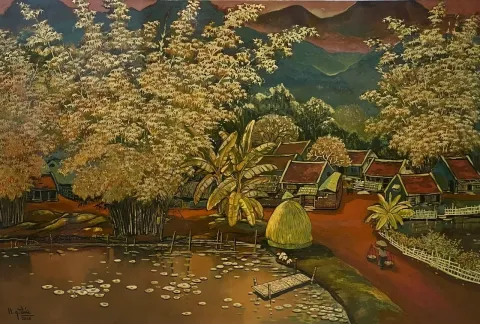
Pham Thang Long – Nostalgic Hanoi Old Quarter scenes and lotus compositions in lacquer. Suitable for restaurants and cultural spaces that want to evoke the soul of Hanoi.
Thanh Chuong – One of Vietnam's most celebrated lacquer masters. His work carries museum-level prestige and is ideal for signature spaces where the hotel wants to make a bold artistic statement.
Dinh Quan – Elegant figurative lacquer paintings of women in áo dài. His work brings grace and cultural sophistication to upscale lobbies and VIP areas.
Nguyen Quang Duc – Vivid lacquer scenes of rural Vietnamese life. His warm, colorful compositions are perfect for restaurants and dining spaces.
Pham Cuong – Expressive oil paintings of Hanoi's streets. Excellent for urban hotels that want to connect guests to the city outside their doors.
Lam Manh – Abstract lacquer compositions. Ideal for modern and minimalist properties that want cultural depth without figurative imagery.
Nguyen Minh Son – Contemporary paintings with a contemplative, minimalist sensibility. Well-suited for boutique hotels and wellness retreats where visual calm is paramount.
The Business Case: Original Art vs. Reproductions
Some hotel developers consider reproductions or prints as a cost-saving measure. This is a false economy for several reasons:
Guest perception. Discerning guests can tell the difference between an original painting and a print. In a luxury property where every detail is curated, a reproduction on the wall sends the wrong message. An original says "we care about authenticity." A print says "we cut corners."
Longevity. A high-quality print will fade and deteriorate within 5-10 years in the light and humidity conditions typical of Vietnamese hotels. An original lacquer painting, properly cared for, will last decades without degradation. Over the lifecycle of a hotel, originals are often less expensive per year than prints that need periodic replacement.
Marketing value. Hotels with curated original art collections gain a marketing advantage. Travel publications, design magazines, and social media influencers increasingly feature hotel art in their coverage. An original Vietnamese lacquer painting by a named artist gives a property editorial content that a generic print never will.
Asset value. Original paintings by established Vietnamese artists have historically appreciated in value. The art in your hotel is not just a cost – it is an asset on your balance sheet that may be worth more in ten years than you paid for it.
How Hanoi Art Gallery Works with Hospitality Projects
Hanoi Art Gallery has extensive experience supplying original Vietnamese art to hotels, resorts, restaurants, and corporate spaces. The process typically works as follows:
Consultation. Share your project details – property type, design concept, number of spaces, budget range. The gallery team will propose a curated selection of artists and works that align with your vision.
Site assessment. For major projects, the gallery can review floor plans, interior renderings, or photos of the spaces to recommend specific sizes, subjects, and placement.
Selection. Choose from the gallery's existing inventory of hundreds of original paintings or commission custom works created specifically for your property. Commissions allow you to specify exact sizes, color palettes, and subject matter to match your interior design.
Production. For commissioned works, production typically takes 6-12 weeks depending on the number of pieces, sizes, and techniques involved. The gallery coordinates directly with the artists and provides progress updates.
Delivery and installation. All artworks are professionally packed and shipped worldwide via FedEx with full insurance. For large projects, the gallery can coordinate consolidated shipments and provide installation guidance.
Documentation. Every painting comes with an artist-signed Certificate of Authenticity – important for both the property's records and for guest-facing materials that highlight the art collection.
Volume and Budget
Hanoi Art Gallery offers volume pricing for hospitality projects. Whether you need five paintings for a boutique hotel or fifty for a resort, the gallery can work within your budget while maintaining the quality and authenticity that make the investment worthwhile.
A typical boutique hotel project (20-30 rooms plus public spaces) might include:
2-3 large-format feature pieces for lobby and signature spaces
20-30 medium-format works for guest rooms
8-12 smaller pieces for corridors and secondary spaces
Contact the gallery early in your design process – ideally during the interior design phase – to allow time for selection, commissions, and production.
Start Your Hotel Art Project
Whether you are developing a new property, renovating an existing one, or simply looking to refresh the art in your hotel, Hanoi Art Gallery is your partner for authentic Vietnamese art that elevates guest experience and reinforces your brand.
Contact the gallery team to discuss your project:
Email: hanoiart36@gmail.com
WhatsApp/Zalo: +84 984 589 999
Visit: 36-38 Trang Tien Street, Hanoi, Vietnam
Online: hanoi-artgallery.com