Art collecting is one of the few forms of investment that pays dividends before you sell. A painting you love lives with you – on your wall, in your daily life – returning value in aesthetic pleasure and cultural richness every single day. If it also appreciates financially over time, that is a bonus. If it appreciates significantly, as Vietnamese fine art has done for many collectors over the past two decades, that bonus can be substantial.
This guide is written for anyone considering beginning a collection of Vietnamese fine art – whether your primary motivation is aesthetic, financial, or both.
Why Vietnamese Fine Art Now
The case for Vietnamese contemporary art as a collecting category is stronger today than it has ever been. Several factors converge to make this an interesting moment to begin.
Growing international recognition: Vietnamese art has been gaining visibility on the international auction circuit over the past decade. Works by Vietnamese artists – particularly from the pre-war and wartime periods, but increasingly from living contemporary artists – have achieved prices at major auction houses in Hong Kong, Singapore and London that would have been unimaginable twenty years ago. This trajectory shows no sign of reversing.
Economic context: Vietnam's rapid economic development over the past three decades has created a domestic collector base of considerable scale and sophistication. Vietnamese collectors are now competing with international buyers for the best works, which supports prices and creates liquidity in the market that did not previously exist.
Technical scarcity: Vietnamese lacquer painting – the medium most associated with the finest Vietnamese contemporary art – is genuinely difficult to produce at a high level. The number of artists who have mastered the multi-layer son mai technique to the standard required for serious fine art is small, and it is not growing quickly. Supply of genuinely exceptional work is structurally limited.
Relative value: Compared to equivalent-quality contemporary art from China, Japan or Western Europe, Vietnamese fine art remains significantly underpriced on a global basis. This is beginning to correct, but for collectors entering the market now, there is still meaningful value available.
What to Buy
Not all Vietnamese art is equally interesting as an investment. Here are the principles that guide serious collectors.
Buy originals, always: Reproductions, prints and copies have no investment value. Every work in a serious collection should be an original, signed by the artist and accompanied by a Certificate of Authenticity. This is non-negotiable.
Buy the best you can afford: In art collecting, quality matters more than quantity. A single exceptional work by an established artist will appreciate more reliably and significantly than several mediocre works at the same total cost. If your budget is limited, buy one strong piece rather than several weak ones.
Focus on established artists with exhibition histories: Artists who have shown their work in significant exhibitions – in Vietnam and internationally – have a documented public record that supports valuation. At Hanoi Art Gallery, all of our represented artists have exhibition histories we can provide on request.
Lacquer first, oil second: For investment purposes, Vietnamese lacquer paintings have historically outperformed oil paintings in terms of price appreciation. This reflects both the technical scarcity of great son mai work and the medium's unique status as a distinctively Vietnamese art form. Oil paintings are excellent for quality of life collecting – for works you want to live with daily – and the best examples are also strong investments.
Document everything: Keep all certificates, invoices, exhibition records and correspondence related to every work you acquire. Provenance and documentation are increasingly important to future buyers and to auction houses. A well-documented collection is significantly more valuable than an undocumented one.
Artists to Consider
At Hanoi Art Gallery, the artists whose works we consider strongest from an investment perspective are:
Thành Chương: Vietnam's most internationally recognised lacquer painter, with a career spanning five decades and works in collections worldwide. Major works by Thành Chương represent the highest tier of the Vietnamese contemporary art market.
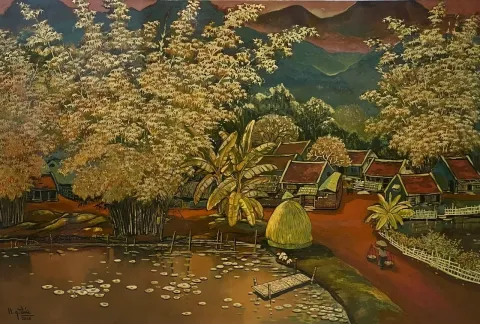
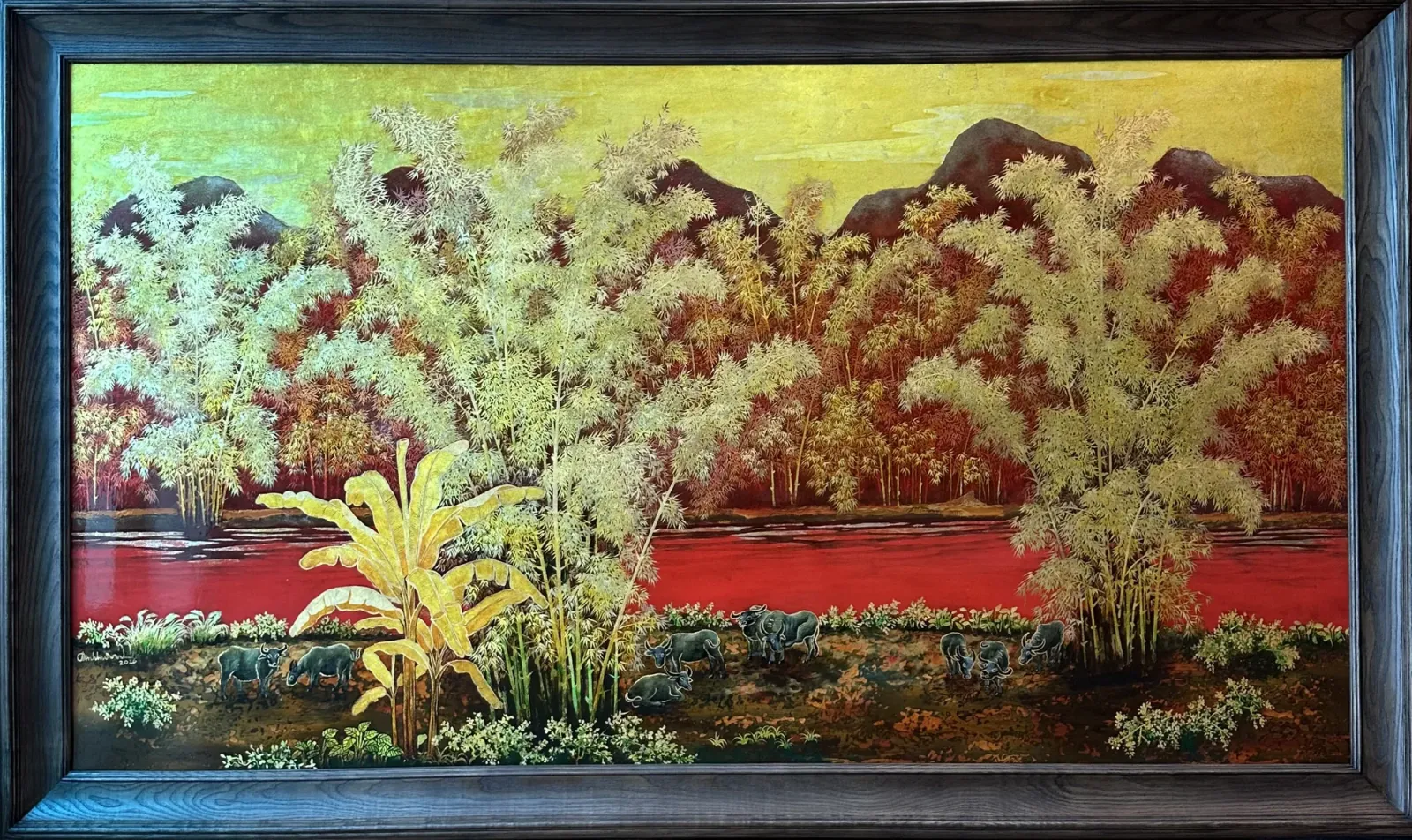
Đinh Việt: A master of lacquer landscape painting with a consistent and growing following among international collectors. His "Whispers of Spring" and "Silent River" series are particularly sought after.
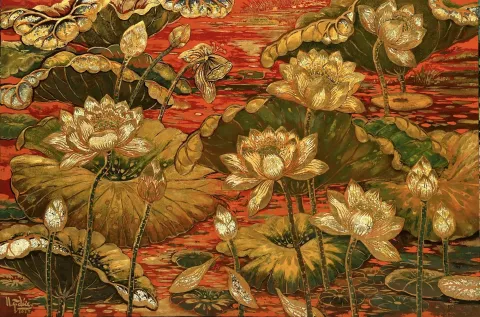
Phạm Thắng Long: His luminous lotus works occupy a unique position in Vietnamese lacquer painting – immediately recognisable and deeply sought after by collectors who value refinement and meditation.
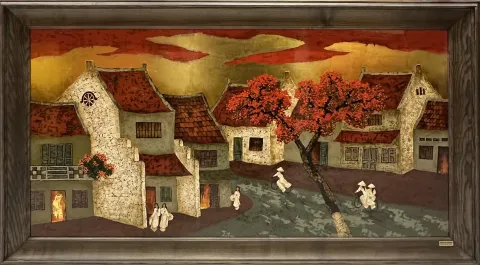
Đinh Quân: The leading figurative lacquer painter working today, with a technically demanding practice and a clear aesthetic identity that has built a loyal collector base.
Nguyễn Văn Bằng: The strongest oil painter in our collection, with an international following that continues to grow. His works offer an accessible entry point to Vietnamese fine art for collectors more familiar with Western painting traditions.
Building a Collection Over Time
The most satisfying collections are built slowly and with purpose. Here is an approach that works for most serious beginners.
Start with one strong piece: Do not spread your initial budget across several works. Buy one painting that genuinely moves you – something you would be happy to look at every day for the rest of your life – from an artist with a documented career. This first acquisition sets the standard for everything that follows.
Learn before you buy more: Spend time with your first work. Read about the artist, visit exhibitions, talk to gallery staff, look at as much Vietnamese art as you can. The more you understand the context of your collection, the better your subsequent choices will be.
Build relationships with galleries: A gallery that knows your taste and your collection can alert you to works you would not otherwise see, advise you on opportunities, and support the valuation of your works when needed. We take these relationships seriously at Hanoi Art Gallery and invest time in our collectors.
Think in decades: Art investment works on a long time horizon. The collectors who have made significant financial returns from Vietnamese art have typically held works for ten years or more. Do not buy with the intention of selling quickly.
Practical Considerations
Storage and display: Lacquer paintings are among the most stable art works to own – resistant to humidity, temperature change and light damage beyond UV. Oil paintings require more care. Both should be hung away from direct sunlight and extreme heat sources.
Insurance: Have your collection professionally valued and insured. As values increase, make sure your coverage keeps pace.
Resale: When you eventually wish to sell, the options include direct sale through a gallery, consignment to auction, or private sale to another collector. We can advise on the best approach for specific works in your collection.
Start With a Conversation
The best way to begin collecting Vietnamese fine art is to spend time with the works themselves and to talk with people who know them well. Our team at Hanoi Art Gallery is available to guide new collectors through the collection, answer questions about specific artists and works, and help you identify the pieces that are right for your taste and budget.
36-38 Trang Tien Street, Hanoi | hanoiart36@gmail.com | WhatsApp/Zalo: +84 984 589 999