
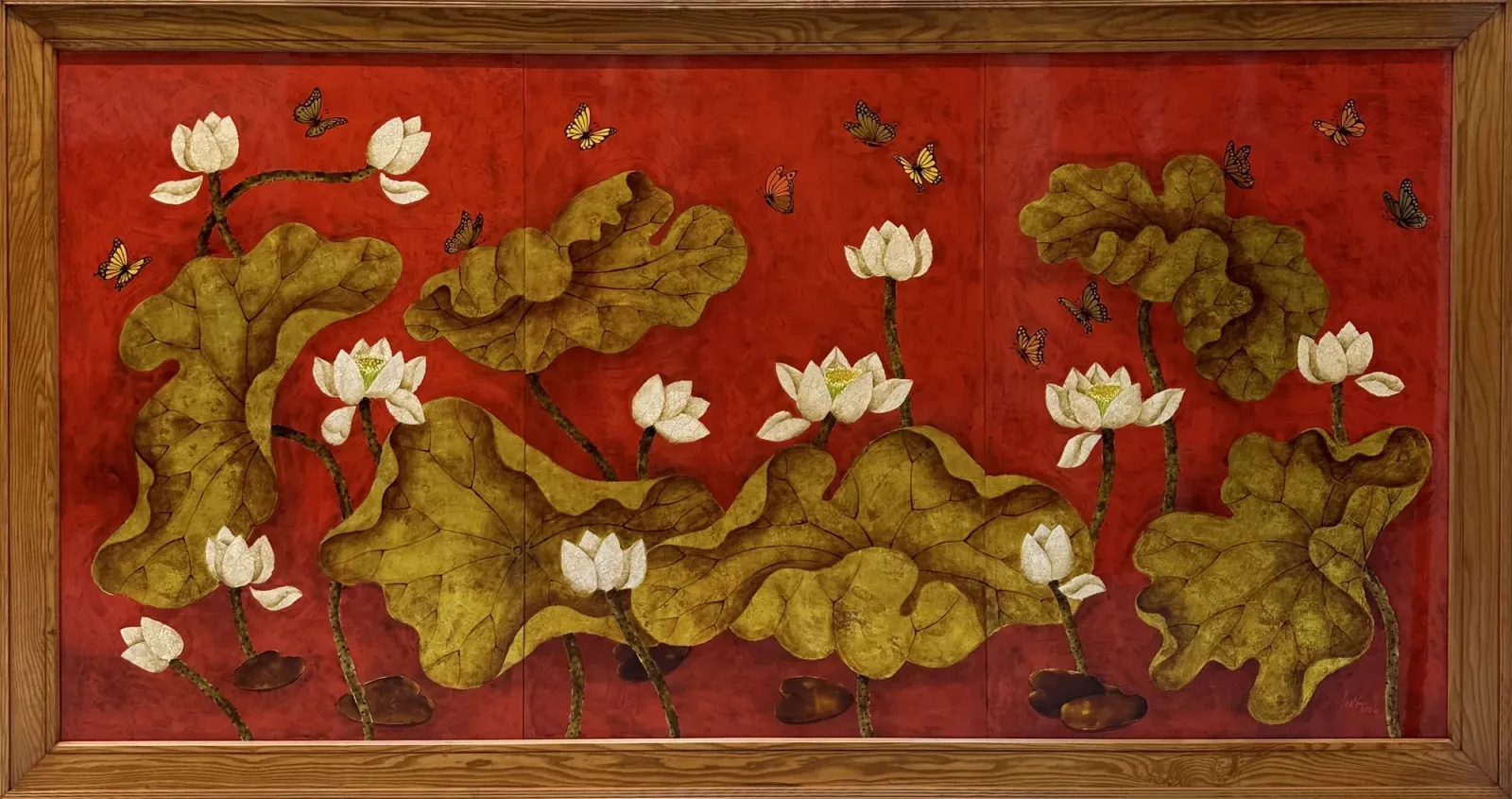
The role of gold leaf in lacquer art involves creating luminous depth and highlighting the spiritual symbolism within traditional Vietnamese paintings. This metallic element interacts with natural resins from the sơn tree to produce a unique texture that defines the medium’s visual identity. By observing these surfaces, you can see how historical craft evolved into a sophisticated fine art form.
You will be able to check how many layers are applied to a single painting and identify the role of natural resins in creating luster. You can also decide which artistic themes suit your collection by comparing different historical milestones with contemporary works. To learn more about specific pieces, ask the gallery about the gilding techniques used.
What makes gold leaf essential to Vietnamese lacquer art?
Gold leaf serves as a primary structural and aesthetic component rather than a simple surface ornament. In the medium of sơn mài, the metallic properties of the leaf interact with the organic resin from the sơn tree to create unique visual depth. This combination can produce a level of luminosity that is hard to achieve with other pigments on a wooden board.
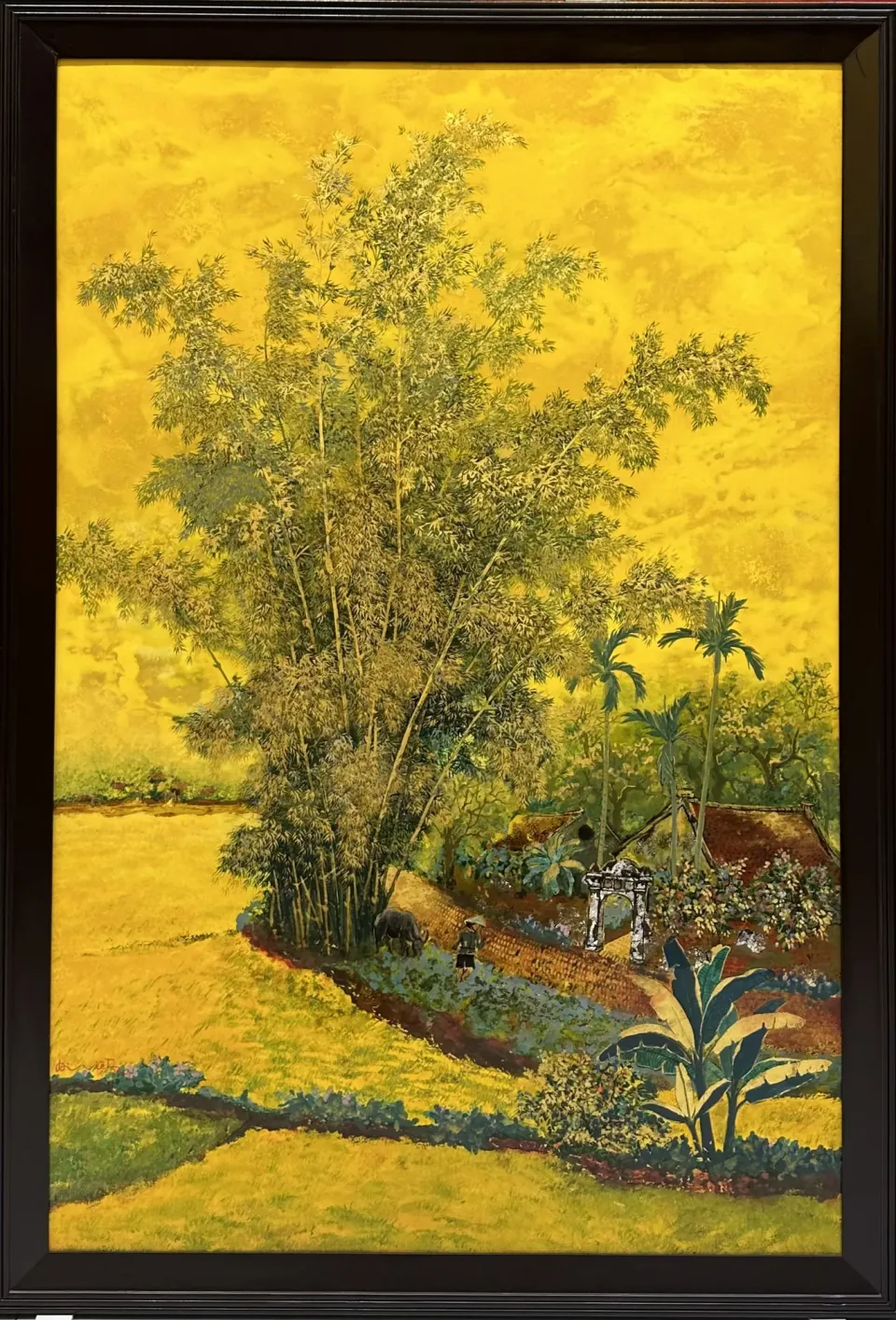
When you observe a work like Northern Vietnam Mountain Village, the gold provides a radiant backdrop that pushes other colors forward. The artist uses these materials to build complex textures through repeated layering and polishing. To understand how this material functions in different contexts, you can consider The Art of Depth in Vietnamese Lacquer:
- Luminous Depth: Gold leaf reflects light from beneath layers of resin, creating a glowing effect that changes as you move around the piece.
- Textural Contrast: It provides a smooth, metallic surface that contrasts with the matte appearance of charcoal or deep green tones.
- Historical Continuity: The use of gold connects modern fine art to centuries of tradition in decorating sacred and household objects.
To better understand the specific application on a piece you like, you may want to ask the gallery about the following:
- How many layers of lacquer are applied over the gold leaf to achieve this specific depth?
- Does the artist use silver powder alongside the gold leaf to create tonal variety?
- How does the light interaction change when viewing the painting from different angles?
How does the layering process create visual depth and luster?
The characteristic 3D effect in Vietnamese lacquer depends on a complex interaction between natural resin and metallic elements. Artists build these works on wooden boards using resin tapped from the sơn tree, which creates a base for many layers of color.
Gold leaf is integrated into this process to provide a radiant backdrop or highlight specific details. Because the resin remains slightly translucent, light passes through multiple coats and reflects off the gold surfaces buried underneath.
To understand how this creates such unique textures, consider these technical steps:
- The artist applies several layers of natural resin to build up the thickness of the painting.
- Gold leaf is carefully placed onto the tacky surface of the wet lacquer.
- Each new layer of resin covers the gold, partially veiling it from direct view.
- The surface is polished repeatedly to reveal the metallic glow through the semi-opaque layers.
You can see this technique in works like Vietnamese village by Dinh Viet, where a radiant gold backdrop contrasts with deep green and charcoal mountains. This layering allows for a rich transition between different tones and textures.
To better understand the specific finish of a piece, you may wish to ask the gallery:
- How many layers of resin are applied to this particular painting?
- Does the gold leaf sit on the surface or is it buried beneath multiple coats?
- How does the light interact with the specific minerals used in the pigments?
What are the differences between real gold leaf and imitation foils?
Understanding the difference between gold leaf and imitation foils can help when you wish to select a piece for your collection. Gold leaf has properties that affect how light interacts with the resinous surface of the painting. In Vietnamese lacquer art, artists often use these materials to create specific textures and luminous depths that are difficult to replicate with synthetic alternatives.
You can identify the quality of a gilded surface by observing several key characteristics:
- Luster: Real gold leaf provides a soft, warm glow that remains consistent from different viewing angles.
- Texture: Gold leaf is very thin and tends to integrate into the lacquer layers rather than sitting on top like heavy paint.
- Durability: Quality gold leaf adheres firmly to the natural resin, preventing peeling or flaking over time.
For example, in a work such as Vietnamese village by Dinh Viet, the artist uses these materials to build a radiant backdrop for mountains and blossoms. This creates a visual contrast against deep green and charcoal tones.
- What type of gold leaf or silver powder was used in this specific painting?
- How does the application of real gold affect the drying time of the natural resin layers?
- Can you provide details on the sourcing and traditional methods for applying the gilding?
How to identify high quality gilding in contemporary paintings?
Recognizing professional craftsmanship in gilded lacquer requires looking closely at how the metal interacts with the natural resin. High-quality application ensures that the gold leaf appears integrated into the surface rather than sitting loosely on top. You can often judge the skill of an artist by observing the consistency of the luster across different textures.
To distinguish professional work from lower quality techniques, you may want to consider these visual cues:
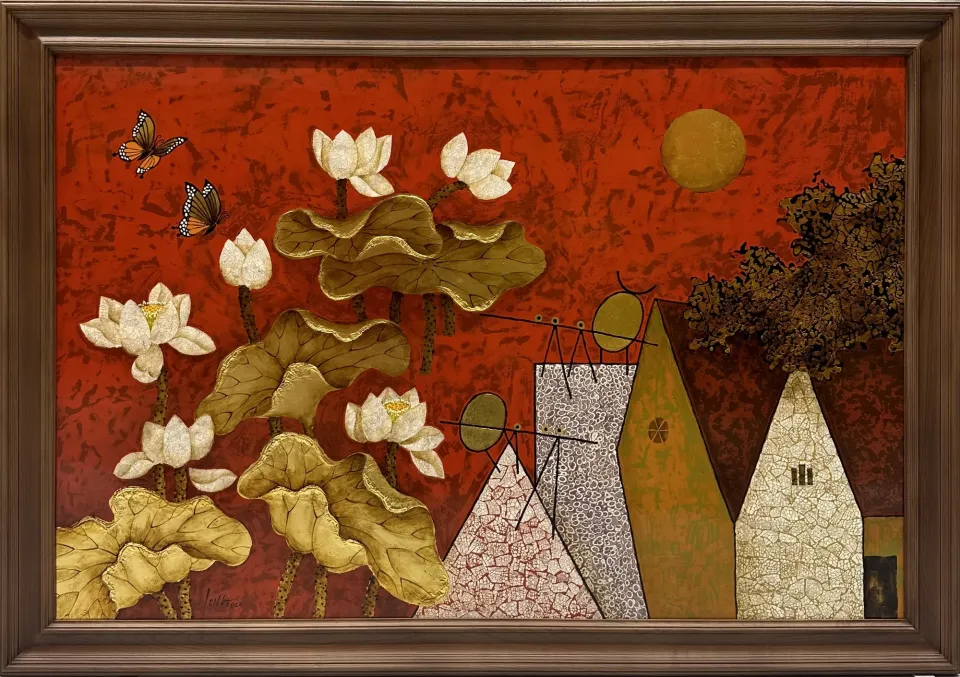
- Observe the transition between gold and dark tones, such as those seen in Vietnamese village by Dinh Viet.
- Check if the gold leaf maintains a steady glow even when viewed from an angle.
- Look for smooth burnishing where the metal reflects light without showing visible cracks or peeling edges.
The technique involves applying many layers of resin and then carefully polishing the surface to reveal the metallic sheen underneath. For example, in The Serene Beauty of a Northern Mountain Village in Contemporary Lacquer Art, the gold backdrop creates a radiant effect that contrasts with charcoal mountains. This depth is achieved through precise layering rather than a single coat of paint.
You can also look at the texture of the board and ask the gallery about the materials used. If you are unsure about a specific technique used in a piece, ask the gallery which methods were used to achieve the final finish.
Related reading: Traditional materials used in Vietnamese lacquer art.
What questions should you ask a gallery about gilded lacquer works?
When selecting lacquer paintings that feature gold leaf, understanding the technical execution is vital for your collection. Because these pieces rely on organic resins from the sơn tree, you should inquire about how the artist ensures the metal remains bonded to the underlying layers. Different techniques can affect both the longevity and the specific way light reflects off the surface.
To gain a clear understanding of a specific work, such as Vietnamese village by Dinh Viet, consider asking the gallery these questions:
- How many layers of natural resin were applied before the gold leaf was introduced?
- Was the gold leaf burnished to create a high shine or left with a matte finish?
- What specific methods does the artist use to prevent the gold from peeling over time?
- Does the piece contain silver powders alongside the gold for added tonal contrast?
You may also want to compare two different styles of gilding. For instance, ask if a work uses a solid gold backdrop or if the leaf is integrated into specific motifs like blossoms or village paths. This distinction helps you determine how the piece will interact with the lighting in your home.
Frequently asked questions
How is the gold leaf applied so that it does not peel off over time?
Artisans achieve durability by integrating the metal into multiple layers of natural resin from the sơn tree. The resin acts as a powerful adhesive, bonding the leaf to the wooden board. You can ask the gallery about the specific layering technique used for a particular work to understand its structural integrity.
Does using real gold leaf change the drying time of the natural resin?
The drying process primarily depends on the environmental conditions and the specific resin used by the artist. While adding metallic elements involves complex steps, the core curing happens within the organic layers. For details on how a specific piece was cured, you should contact the gallery directly.
Can you tell if a painting uses gold paint instead of actual gold leaf?
You can often distinguish these by observing the way light interacts with the surface. Gold leaf provides a unique reflective depth and texture that flat paint cannot replicate. Look at works like Vietnamese village to see how the metal creates a radiant backdrop against deep green mountains.
How do artisans ensure an even glow across large surfaces like landscapes?
Artists use precise burnishing techniques to distribute the luster uniformly over wide areas. This requires steady hand movements and specialized tools to polish the resin until the gold shines consistently. The level of uniformity depends on the artist’s experience and the scale of the specific painting.